

Bus Shelter Benches
Stainless steel and HDPE perch benches with armrests — anti-skateboard, anti-loitering geometry, vandal-resistant fasteners.
Bus Shelter Benches
Bus shelter benches are sold as a standalone product for sites where a full enclosed shelter isn't justified — low-frequency rural stops, signed-only school routes, downtown infill where a shelter would block sight lines, and patch-and-replace work on existing shelter networks. We ship benches in 1. 2 m, 1.
Features & Specifications
About Bus Shelter Benches
Key Takeaways
- ✓Key features: 1.2 m, 1.8 m, 2.4 m, 3.0 m lengths — same powder-coat library as our shelter line, 6063-T6 aluminum slat seat with 5 mm slats and 12 mm drainage gaps, AAMA 2604 powder coat for 10-year colour fastness in Canadian sun
- ✓Backed by a 25-year warranty
Standard construction is a 6063-T6 aluminum slat seat on a 6005A-T6 aluminum or hot-dip galvanized HSS steel substructure. Aluminum slats are 5 mm thick with a 12 mm air gap between for drainage and vandal-resistance (no continuous surface for marker tagging). Powder coat is AAMA 2604 for 10-year colour fastness in Canadian sun. We also offer recycled-plastic lumber (HDPE with 25-year warranty) for environmentally-conscious campuses, and perforated steel for transit-authority style matches.
Bus Shelter Benches — Engineering & Construction
Every bench is AODA / CSA B651-18 compliant by default — seat height 430–480 mm AFF, front and rear armrests for sit-to-stand, anti-skateboard caps at corners, and 70% LRV contrast between seat and substructure for low-vision rider visibility. Heated bench surfaces (250–400 W radiant) are available for grid-connected sites; warmer-handle seat noses are an additional cold-weather option for STM and Quebec deployments. Footings are designed to local frost depth and ship with anchor templates and drilling jigs. Benches are deployed across Toronto Transit Commission, STM, Calgary Transit, Saskatoon Transit, and several rural Saskatchewan and Manitoba routes.
Installation & Compliance
Lead time 4–6 weeks for standard configurations. Pricing starts at $1,200 for a 1. 8 m bench structure plus $400–$900 for installation. Bench installation is a half-day to full-day job per location depending on whether you're using cast-in-place footings, pre-cast piers, or surface-mount tamper-resistant bolts (suitable for sites with no frost concern, e.
Warranty & Support
g. covered concourses). Anchor templates and drilling jigs ship with every order so a municipal works crew can self-install — the on-site programme is typically 2 techs, 1 day, 4 benches including footing pours. Warranty is 15 years on the aluminum frame and substructure, 25 years on recycled-HDPE lumber slats (manufacturer pass-through), 10 years on powder-coat finish (AAMA 2604), 3 years on the heated-seat element, and 5 years on tactile/contrast components.
Procurement & Lead Time
Accessories are stocked at the Brantford warehouse with 48-hour shipping: replacement slats, end caps, armrests, anti-skateboard caps, and tamper-resistant fasteners. Volume contracts (50+ benches per year) trigger 15–22% pricing reductions. For school boards and small municipalities, our bench-only starter kit bundles four 1. 8 m benches, anchor templates, and an installation video for under $7,500 delivered — an entry point that fits most discretionary works budgets.
Key Takeaway: Climate-rated, AODA-compliant, and stamped-engineered for Canadian transit deployment — full procurement documentation included.
Product Specifications
| Specification | Details |
|---|---|
| Product | Bus Shelter Benches |
| Frame & Glazing | 6063-T6 aluminum frame; 6 mm tempered safety glass to CSA Z97.1 (polycarbonate option) |
| Installation | Bonded crews, full traffic-management, 3–4 working days per site |
| Warranty | 10-year structural; 5-year glazing & bench; 48-hour replacement-parts SLA |
| Compliance | NBCC 2020 stamped engineering; AODA / CSA B651-18 accessibility |
| Lead Time | 6–10 weeks standard configurations; 8–14 weeks custom |
Why Choose Bus Shelter Benches?
Bus Shelter Benches from BusShelters.ca are engineered for Canadian transit conditions — climate-rated, accessibility-compliant, and shipped with full procurement documentation so AHJ review is single-pass.
Bus Shelter Benches Available Across Canada
We design, supply, and install bus shelter benches in major cities across all 10 provinces and 3 territories.
Frequently Asked Questions About Bus Shelter Benches
How much does a bus shelter cost in Canada?
In Canada, standard freestanding bus shelters typically run $6,500–$14,000 for the structure plus $2,500–$6,000 for installation, including footings and electrical. Solar-powered units add $1,500–$3,500, and heated shelters add $3,000–$7,000 depending on heater wattage and bench heat. Custom architectural shelters for heritage districts or campuses can reach $25,000–$60,000+. Volume orders of 20+ units typically reduce per-unit pricing by 15–25%. Lifecycle cost is the better lens than first-cost: a stamped-engineered shelter with a 10-year structural warranty and a 48-hour parts SLA typically delivers a 15–18 year service life on the structure and 5–8 years on glazing and benches before refresh, which works out to roughly $1,000–$1,800 per shelter per year total cost of ownership including maintenance. Off-grid solar and heated configurations carry a higher first-cost but eliminate trenched-electrical and ongoing utility charges, which on rural sites pays back inside 6 years.
Are your bus shelters AODA / accessibility-code compliant?
Yes. Every shelter we ship to Ontario meets AODA (Accessibility for Ontarians with Disabilities Act) integrated standards, including ≥1500 mm clear floor space for wheelchairs, transfer benches, tactile wayfinding strips, and high-contrast colour bands. We also conform to CSA B651, the BC Building Code Section 3.8, and the Quebec RBQ accessibility provisions across all provinces. Compliance is documented per province: AODA Design of Public Spaces in Ontario, RBQ Chapter VIII in Quebec, BC Accessibility Act in British Columbia, and the federal Accessible Canada Act for federally-regulated sites (airports, federal-government buildings). Every shelter ships with the CSA B651-18 design checklist cross-referenced to the as-built drawings, which most procurement teams drop directly into their accessibility-board review pack. A free accessibility audit of any existing shelter network is available on request — useful when planning capital-renewal upgrades.
What materials are used in your bus shelters?
Frames are 6061-T6 extruded aluminum or hot-dipped galvanized steel depending on application; walls are 6 mm tempered safety glass or 8–12 mm clear/tinted polycarbonate in high-vandalism areas. Roofs are double-skin polycarbonate or standing-seam aluminum. Benches are stainless steel or HDPE recycled-plastic lumber. Fasteners are tamper-proof stainless throughout. Material selection is climate-driven: aluminum on coastal and road-salt sites where steel corrodes, hot-dip galvanized HSS where impact loading matters (snow-blower throw, vehicle proximity), polycarbonate on campus and school sites where vandal resistance trumps glass clarity. Powder-coat finish is AAMA 2604 for 10-year colour fastness in Canadian sun. Gaskets and sealants are silicone with -50 °C flexibility to survive 90+ freeze-thaw cycles a year on the Prairies. The full material specification by product line is on each product page.
Related shelters
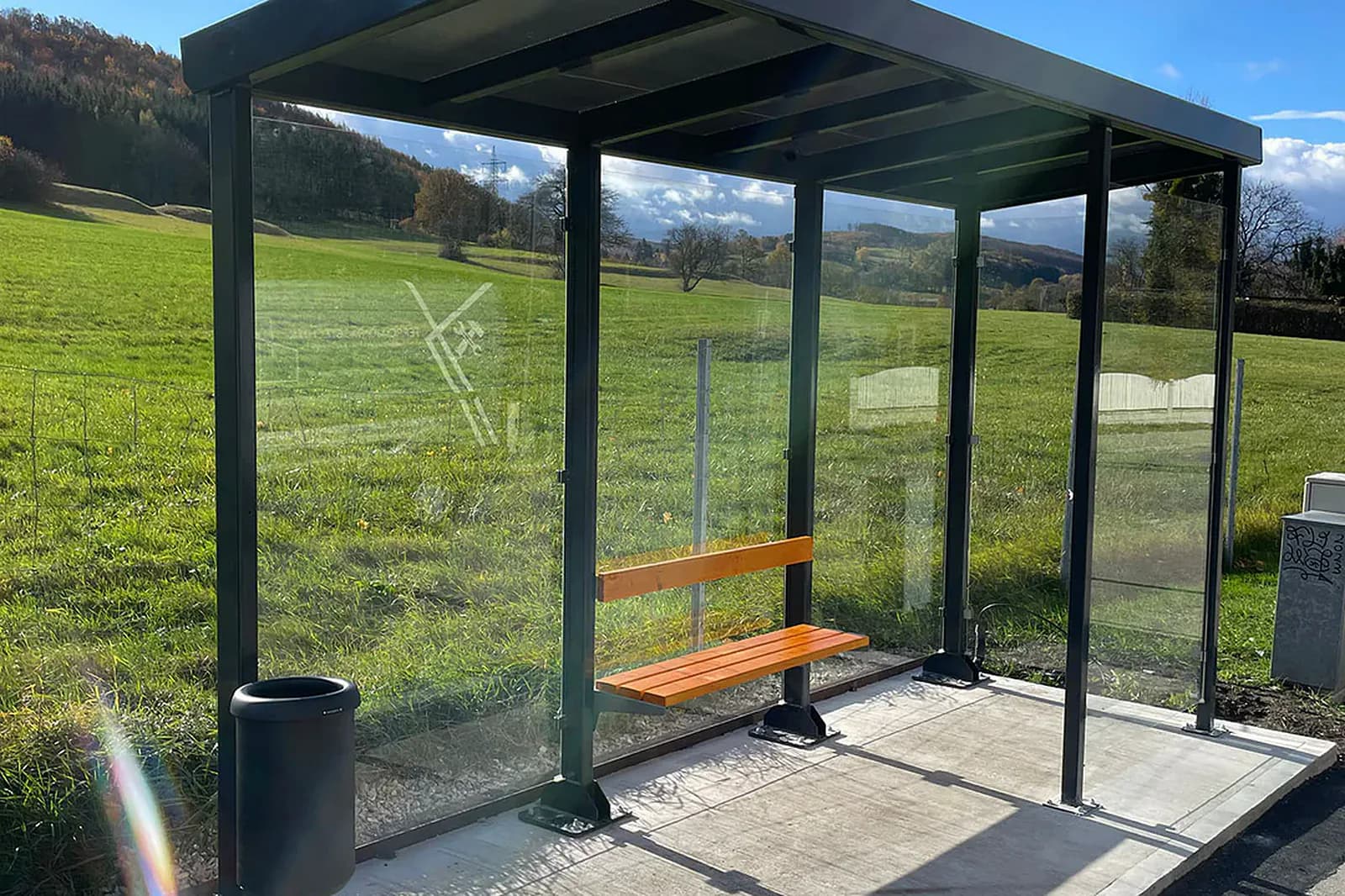
Standard Bus Shelters
Cantilever and freestanding bus shelters built for Canadian winters — tempered glass walls, anti-graffiti panels, integrated bench.
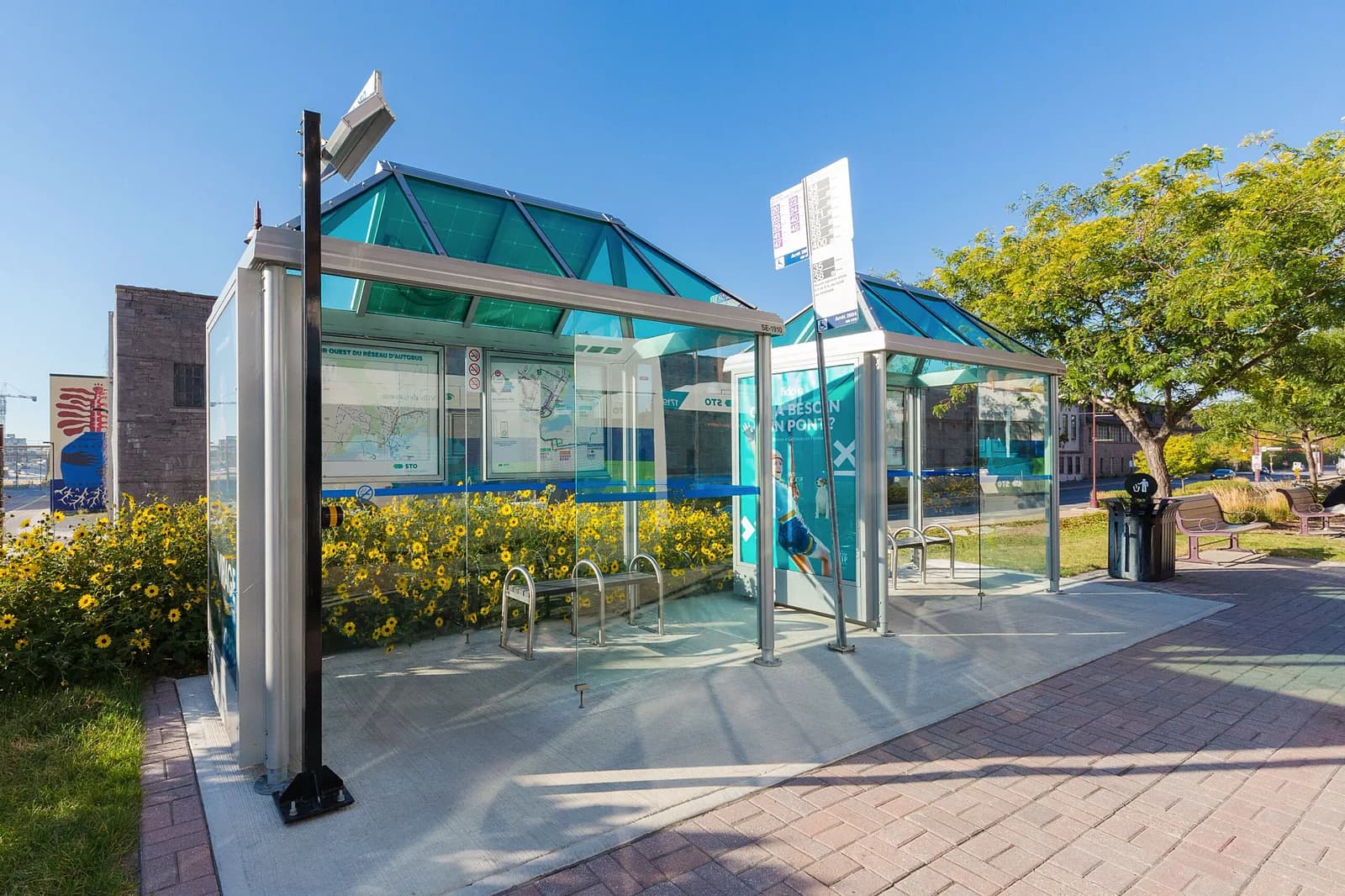
Solar-Powered Bus Shelters
Off-grid LED-lit shelters with rooftop PV array — no trenching, no electrical connection, full winter operation.
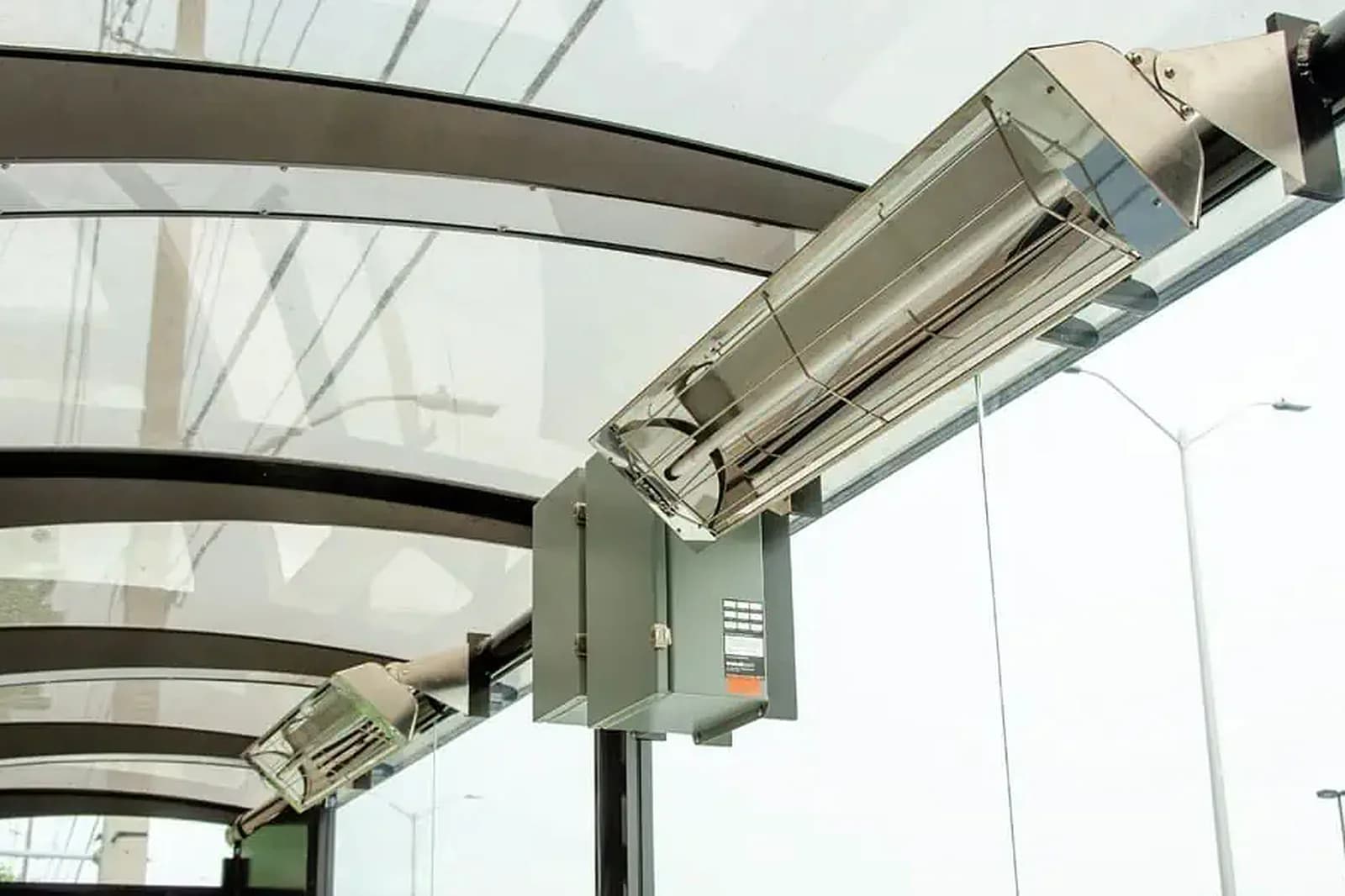
Heated Bus Shelters
Radiant overhead heating panels triggered by motion sensor — thermal comfort below -30°C, heated bench seat option.
Need Bus Shelter Benches?
Our bid desk responds to every quote and RFP within one business day. Volume discounts available on 20+ unit orders.